Wild Boar Tracks – how to recognize footprints, wallows, and signs in the terrain

Wild boar can be difficult to see, even in a territory where they are present in large numbers. They are often most active during the dark hours, they use dense vegetation for cover, and they can travel long distances between resting areas and foraging grounds. Therefore, you often discover wild boar through their tracks long before you see the animals themselves.
Being able to read the signs in the terrain is useful both for hunting and for general nature observation. Footprints can tell you which way an animal has gone. Dug-up soil can reveal an area where a sounder has been foraging. Muddy tree trunks can indicate that there is a wallow nearby, and a clear trail can reveal a regular route between daytime bedding areas and feeding grounds.
In this guide, we walk through the most important signs of wild boar and explain how you distinguish them from the tracks of deer.
What does a wild boar footprint look like?
A typical wild boar track is relatively wide and rounded compared to many deer tracks. The two main hooves form an imprint that often appears more compact and less pointed than, for example, a roe deer track.
In an adult wild boar, the hoof print itself is often about 5-7 cm long and about 5-6 cm wide. The size naturally varies with the age and sex of the animal, and the substrate can make the print look both larger and smaller.
The most characteristic feature is therefore not just the size, but the combination of width, shape, and any marks from the dewclaws.
The dewclaws are an important characteristic
Behind the main hooves are the wild boar's dewclaws. In soft ground, they can leave clear imprints.
In wild boar, the dewclaws are located relatively far out to the sides. This can result in a track where you see two smaller marks behind and outside the two central hooves.
This is a useful feature when distinguishing the track from deer. In deer, the dewclaws can also leave marks, especially when the animal sinks deeply or moves quickly, but they typically sit differently in relation to the main hooves.
However, you should never identify a track based on a single detail. Look at the entire track and preferably several prints in succession.
Wild boar or roe deer – here is how you tell the difference
Roe deer usually have a smaller and more pointed hoof print. The two hooves often form a more heart-shaped profile, while a wild boar track appears wider and more rounded.
A large roe deer track in soft soil can be misleading, just as a young wild boar can have small imprints.
Therefore, look for several signs at the same time:
- Is the track wide in proportion to its length?
- Are the hoof tips relatively rounded?
- Are dewclaws clearly visible out to the sides?
- Are there other wild boar signs nearby, such as dug-up soil or wallows?
If several of these things match, the identification of the species becomes much more certain.
Wild boar or red deer?
Comparison with red deer can be more difficult because a large red deer can also leave substantial tracks.
However, red deer hooves are generally more elongated and pointed, while the wild boar's print often appears more compact and wide.
In deep mud, the difference becomes less clear. Here, both main hooves and dewclaws can spread out, and an otherwise characteristic print becomes smeared.
The best approach is to find a section of the trail on firmer ground and compare several prints.
Size does not always tell you the sex and age
It can be tempting to see a large track and conclude that it comes from a large boar.
It is not that simple.
A large foot naturally suggests a larger animal, but the track size is affected by the substrate, speed, and how deeply the animal sinks. A large sow can also leave significant tracks, and a smeared print can appear larger than the actual hoof.
Tracks are therefore best at telling you that there are wild boar in the area, where they are moving, and roughly what size animal might be involved. A reliable assessment of sex and age usually requires more information.
Look for a whole track row
A single footprint is a snapshot. A track row tells a story.
When you follow several prints, you can see the direction of travel and get an idea of the pace. You can also discover whether it is one animal or several animals that have used the same trail.
A family group can leave a jumble of tracks with many different sizes. A single large boar, on the other hand, can leave a more isolated row of tracks.
On sandy forest roads, muddy passages, and around water holes, track rows are often easiest to read.
Dug-up soil – one of the clearest signs
One of the most characteristic signs of wild boar is soil that has been rooted up while foraging.
The wild boar uses its snout as an effective tool. It can flip sod, dig in the forest floor, and search for, among other things, roots, larvae, worms, acorns, and other food sources.
The result is often called 'bök' in Swedish and can look as if the ground has been tilled or plowed in smaller or larger patches.
When wild boar turn over sod, the roots can be left visible, facing upward. In an area with many animals, large areas can be worked through in a single night.
Is the digging fresh?
Freshness is often more interesting than the mere presence of tracks.
Freshly dug-up soil will typically be darker and moister than the surface around it. The vegetation may still be green, and the clumps of soil have sharp edges.
As the area dries out, collapses, and is covered by leaves, it becomes clearly older.
After rain, the assessment can be more difficult because old digging becomes wet again. Therefore, you should compare the digging with fresh footprints, droppings, and possibly images from a trail camera.
Wallows reveal regular activity
Wild boar like to roll in mud and water. A natural or artificial wallow can therefore become an important gathering point.
An active wallow is often known by muddy edges, many footprints, and clear trails into and out of the area.
The water can be murky after recent activity, and vegetation around the hole may be trampled down.
Wallows are particularly interesting because the wild boar often use them repeatedly when conditions are right.
Why do wild boar wallow?
Wallowing helps the animals with temperature regulation and skin care, among other things. The mud can also help to irritate skin parasites.
After wallowing, the animals often rub themselves against trees or posts.
Therefore, another classic wild boar sign is often found quite close by: the rubbing tree.
Rubbing trees with mud and hair
A tree that wild boar repeatedly use after a mud bath can develop a clear dark and muddy zone on the trunk.
The surface can be smooth or worn, and a few coarse hairs may be stuck in the bark.
The height of the mud can give a rough idea of the size of the animals using the tree, but be careful with very precise conclusions.
A rubbing tree close to a wallow and with fresh tracks around it is a strong sign of regular wild boar activity.
Trails – the wild boar's fixed routes
Like other larger game, wild boar often use fixed passages through the terrain.
A trail can connect dense daytime cover with fields, feeding stations, bait sites, water, or areas with natural food.
If the trail is used frequently, the vegetation becomes flattened and the soil exposed. In wet weather, it can be full of hoof prints.
A single clear trail, however, is not automatically a wild boar trail. Roe deer, fallow deer, and red deer can use the same passages.
Therefore, look for the species-specific signs in the track itself.
Droppings from wild boar
Wild boar droppings vary greatly depending on their diet.
They can appear as sausage-shaped pieces or as several partially connected lumps. Consistency and color can change significantly throughout the year.
This makes droppings less unambiguous than a good footprint, but in combination with other signs, they can be useful.
Fresh droppings on a trail with fresh wild boar tracks naturally show that the animals have been there recently.
Hair can be an extra trace
Wild boar have coarse bristles. They can be found on barbed wire, dense vegetation, or rubbing trees where the animals have passed.
A single hair is rarely enough for a certain conclusion for the inexperienced, but together with mud, tracks, and other signs, it strengthens the picture.
Avoid confusing animal hair with coarse plant fibers or hair from other animals.
Listen for tracks in the landscape – not just on the ground
Tracking is also about understanding the landscape.
If you find fresh footprints on a forest road, ask yourself where the animals are likely coming from and where they are going.
Is there a dense area of conifers on one side and a cornfield on the other? Is there a stream or a wallow nearby? Is the road always crossed at the same place?
When the tracks are placed into the context of the terrain, they become far more valuable.
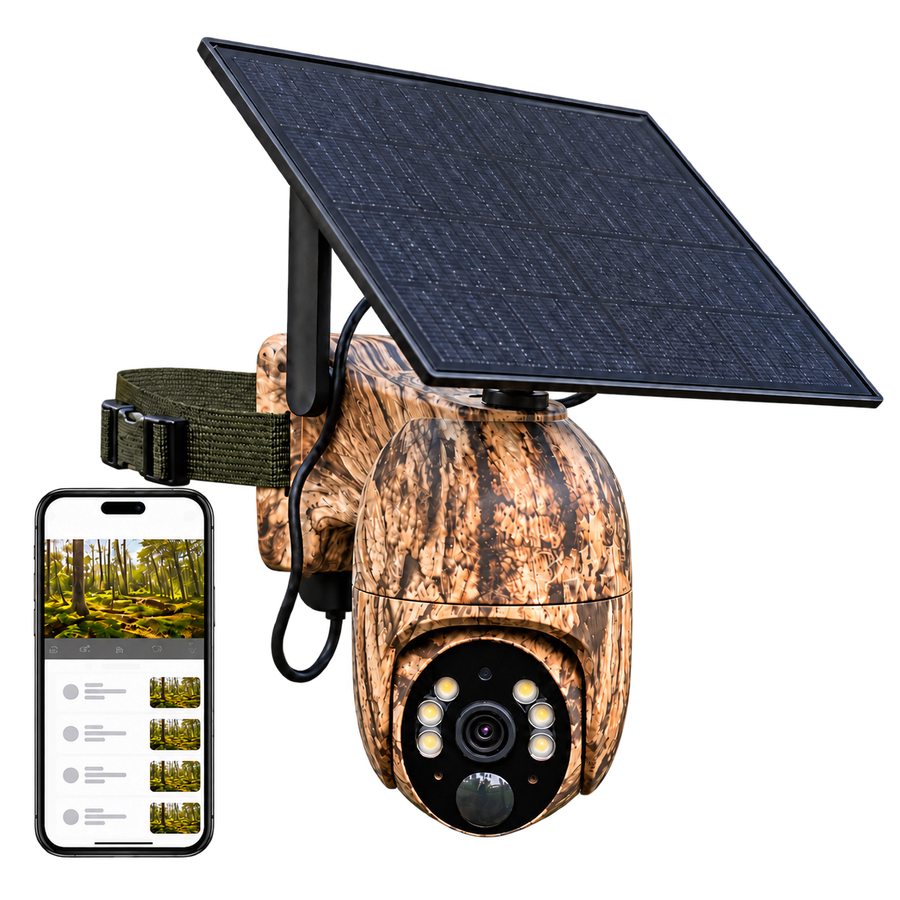
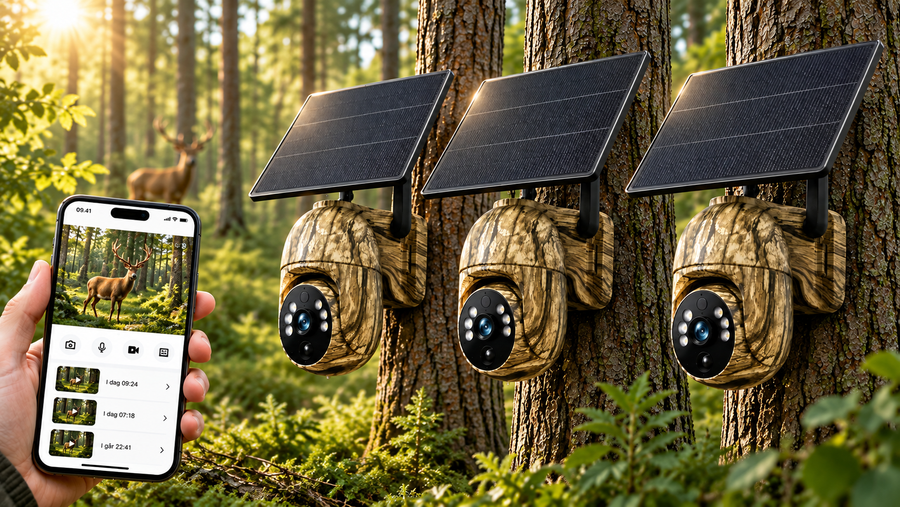
Use a trail camera to confirm your tracking
A trail camera is a good supplement to classic tracking.
If you have found an active trail or a wallow, the camera can show which animals are actually using the place and when they arrive.
It can also reveal how quickly the tracks change after a visit. Over time, you learn, for example, what the ground looks like a few hours after a sounder has passed and what it looks like two days later.
That combination makes you better at reading the terrain even in places without a camera.
Wind and disturbance matter
If the purpose of the tracking is hunting, you should avoid walking directly over the most used trails unnecessarily.
Human scent, noise, and repeated activity can change the animals' behavior.
Therefore, examine tracks from forest roads, edges, and natural crossings, where you can read the activity without trampling through the animals' daytime cover.
Especially around an established bait site, unnecessary inspection visits can do more harm than good.
Tracks change with the weather
A footprint should always be assessed in relation to the weather.
A sharp print in moist soil can be a few hours old, but if there has been no wind or rain, good tracks can remain for surprisingly long.
Rain can blur the edges. Frost can preserve a track. Sun and wind dry out the surface.
If you want to judge freshness, you must therefore know what the weather has done since the last precipitation.
Snow is a fantastic teaching tool
Fresh snow makes it much easier to understand the movements of the wild boar.
Here you can follow an entire progression: where the animal came from, where it stopped, where it searched for food, and where it left the area.
At the same time, it becomes clear how much a track changes shape depending on the animal's gait and the depth of the snow.
A winter trip without hunting can therefore be some of the best training in tracking.
Frequently asked questions about wild boar tracks
How big is a wild boar track?
An adult wild boar's main hoof print is often about 5-7 cm long and 5-6 cm wide, but the substrate and the size of the animal can change the visible print significantly.
How do you tell the difference between wild boar and roe deer?
The wild boar track is generally wider and more rounded. The roe deer's print is smaller and more pointed. In soft soil, the wild boar's dewclaws can often be seen out to the sides.
Do wild boar always put their dewclaws in the ground?
No. On hard ground or when walking calmly, they can be invisible. They are seen more often in soft soil, mud, snow, or when moving faster.
What does dug-up soil in the forest mean?
If the soil is turned over in larger or smaller patches, it may be wild boar that have searched for food with their snouts. Check the area for footprints and other signs.
What does an active wallow look like?
An active wallow typically has many tracks, muddy edges, trampled vegetation, and often rubbing trees nearby.
How do you know if the tracks are fresh?
Look at the sharpness of the edges, the moisture in the exposed soil, and the latest weather conditions. Preferably compare with a trail camera or other fresh signs.
Learn to see the big picture
The best wild boar track is rarely one perfect hoof print. It is the combination of multiple pieces of information.
A wide track on a muddy forest road. A trail into the thicket. Freshly dug-up soil. A wallow. Mud on a tree trunk. Maybe a few coarse hairs in the bark.
When the signs match, you begin to understand not just that the wild boar are there, but also how they use the area.
That is the true value of tracking – and a skill that gets better with every trip in the field.
Cover photo: 4028mdk09, CC BY-SA 3.0, via Wikimedia Commons (source)